
How to Eat Out Without Undoing Your Week
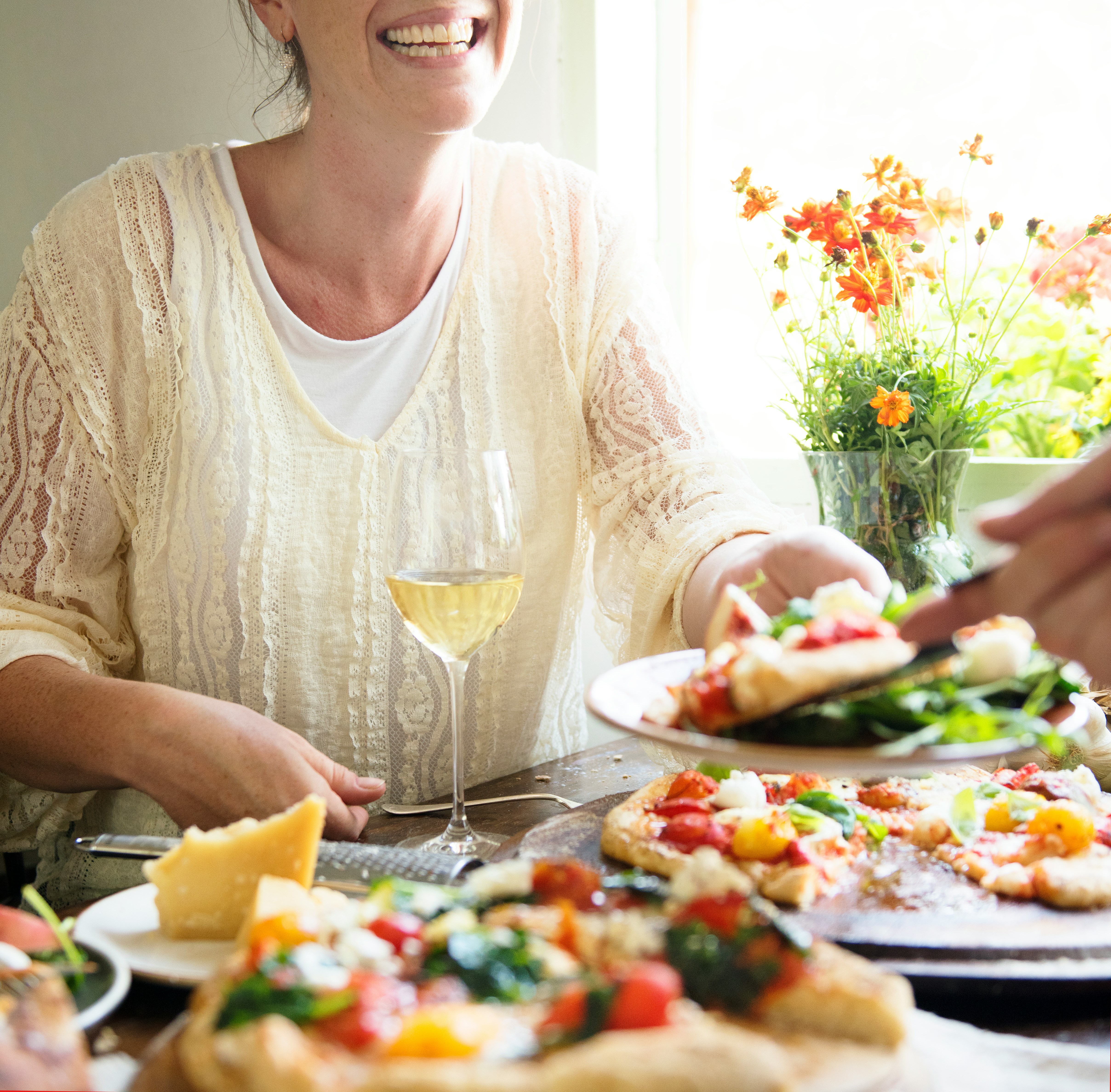
Hello my friends.
Here's a question I get almost weekly, usually with a slightly guilty look attached: "We're going out Friday night — what do I do?"
And here's my honest answer, every single time: go, and enjoy it.
I know that's not the answer people are braced for. But I've been doing this long enough to know that the meal out is almost never what derails someone. What derails them is what happens in their head afterward — the guilt, the "well, I've blown it now," and the three days of either restriction or free-fall that follow.
So let's take the whole thing apart, because eating out is not a problem to be solved. It's part of a life worth having.
The math nobody does
You eat somewhere around twenty-one meals a week, plus whatever's in between. One dinner out is one of them.
Read that again if you need to. One.
No single meal has the power to undo a week of showing up, sleeping well, and moving your body. It just doesn't work that way. Bodies are far more resilient and far less dramatic than the diet industry has led us to believe.
What does have that power is a story that starts with "I already ruined it." That story has cost more people their progress than any restaurant menu ever has.
Before you go
Two things make a bigger difference than anything you do at the table.
Don't arrive starving. This is the big one. If you've been "saving up" all day for dinner, you'll walk in with your judgment already gone, and you'll be halfway through the bread basket before your coat is off. That's not a character flaw, it's just biology. Eat normally during the day. Have something with some protein in it a few hours before you go.
Take thirty seconds with the menu ahead of time. Not to agonize — to decide. Most places post their menu online. Glance at it, pick something that sounds genuinely good to you, and then close it. Decisions made calmly at home are almost always better than decisions made at a table while five other people are ordering.
At the table
Build the plate the way you'd build it at home. Something with protein, something green or colorful, and then whatever you actually want. That's it. That's the whole framework, and it works at a steakhouse, a taco place, or your sister's kitchen.
Eat slowly enough to notice you're eating. This is the one I'd pick if I could only pick one. Put the fork down between bites. Talk to the people you're with. Fullness takes a while to arrive, and if you're eating fast you'll blow right past it and only find out twenty minutes later.
And yes, have the bread. Have the dessert if you want the dessert. Order the thing that made you want to go to this restaurant in the first place. A meal you enjoyed and a meal you white-knuckled through cost the same, and only one of them was worth going out for.
The part that actually matters
Here's what separates people who eat well for decades from people who cycle in and out of it forever: it's not what they do at the restaurant. It's what they do at the next meal.
The next meal is where it's decided. Not the next diet, not the next Monday, not the next January — the next meal. If Friday's dinner was rich and enormous and wonderful, then Saturday morning you have breakfast. A normal one. You drink some water, you go for your walk, and you get on with your life.
You don't skip it to "even out." You don't add an extra hard workout to pay it off. Exercise is not a punishment you serve for eating, and treating it that way will poison your relationship with both.
About the table full of people
Sometimes the hardest part of eating out isn't the food, it's the commentary. Someone notices what you ordered. Someone announces they're being "so bad." Someone asks if you're still doing "that thing."
You don't owe anybody an explanation of your plate. "This looked good to me" is a complete sentence. And if someone else is deep in their own guilt about their dinner, you don't have to join them there — you can just change the subject.
What I actually want for you
I want you to be able to go to a birthday dinner, a wedding, a holiday table, or a random Tuesday taco run and be fully present for it. To taste your food. To laugh with people you love. And to wake up the next morning and carry on with your habits, unbothered, because nothing actually happened.
That's not a loophole in your health. That is health. Habits that can't survive a restaurant aren't habits that last.
Go enjoy your dinner.
Want a simple framework for building meals that leave you feeling steady? Grab the Second Half Strong guide.
LONGEVITY HABITS, HEALTHY AGING, BUILD RESILIENCE, SUSTAINABLE HEALTH, DAILY HEALTH PRACTICES, LONG-TERM VITALITY
Longevity Isn’t a Hack: How Daily Support Builds Health That Lasts
Longevity isn’t built through hacks or quick fixes. Learn how daily movement, nourishment, rest, and rhythm create lasting health and resilience.
Read more
SNACKS, WELLNESS, NUTRITION, BLOOD SUGAR
Most Valuable Snack Coordinator: Why Smart Snacks Save Your Sanity (and your arm)
A warm, humorous H2-style guide to being your own Most Valuable Snack Coordinator!
Read more
PERIMENOPAUSE, WORKOUT, NUTRITION, SLEEP
Navigating Perimenopause: Small shifts for big changes
Strong Body : Steady Glow
Read more
WELLNESS
Sleep Like a Pro: Why Your Bed is Actually Your Best Friend
Hello there! H2 here. Today I'd like to start a conversation on one of the most important things in our lives that gets over looked. Sleep! So, I'm going to cut...
Read more
WELLNESS
Meditation Made Simple: Small Steps to a Calmer Mind
Meditation can feel daunting at first. The idea of sitting in silence— no phone, no iPad, no TV, or music...
Read more




All Rights Reserved | Copyright H2 Personal Fitness 2026 | Powered by Lead Better HQ