Stop Calling It "Just a Walk"
Hello my friends.
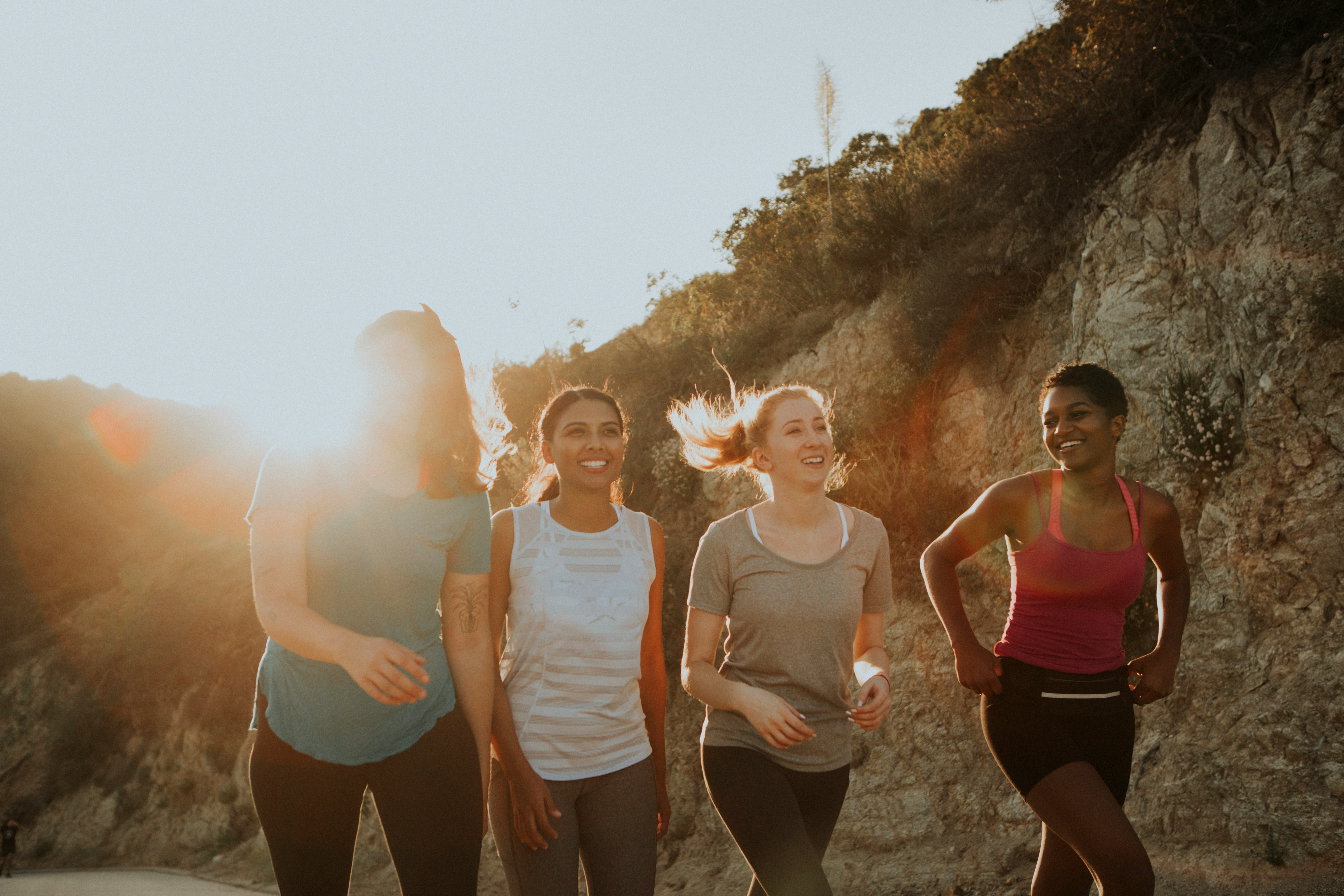
I hear it constantly, and it always comes with a small apology in the voice: "Well, I didn't really work out this week. I just went for walks."
Just.
I'd like to retire that word. Walking is the single most underrated thing most people do for their health, and it gets dismissed for exactly one reason: it doesn't feel hard enough to count.
Let's fix that on both ends. First I want to tell you why it counts. Then I want to give you four ways to make it genuinely harder, if that's what you're after.
Why walking is the one that lasts
I've watched a lot of people start a lot of programs. And here's the pattern I've seen over and over: the thing people are still doing two years later is almost never the intense thing. It's the walk.
There's no membership to cancel, no outfit required, no equipment, no learning curve, and no ninety-minute block to carve out. It's kind to cranky joints. You can do it while you're on the phone with your sister. You can do it in a bad mood. Nobody has ever been too intimidated to walk.
That last part matters more than people realize. Almost every good thing in fitness comes from doing something repeatedly, and the barrier to repeating a walk is about as low as it gets.
So no — it's not "just" a walk. It's the habit with the highest survival rate. If that's the only thing you're doing right now, you are doing something real.
Four ways to turn the dial up
That said, a body adapts. If you've been walking the same loop at the same pace for two years, it's not asking much of you anymore. Here's how to change that without changing the habit.
1. Pace — the easiest and best one.
Instead of one steady speed, play with it. Walk briskly for a minute, easy for two, and repeat. Or pick landmarks: push the pace from this mailbox to that tree, ease off until the corner, go again.
Brisk means you could still talk but you'd rather not be reciting poetry. You don't need a watch or a heart rate zone. Your breath will tell you.
2. Terrain.
Hills. That's it. A hill is free resistance training and it changes what your legs and lungs are doing without adding a single minute to your walk.
Uneven ground is the other one worth seeking out — a trail, a grassy park, a gravel path. Flat pavement asks almost nothing of your ankles and your balance. Uneven ground asks a lot, and those small constant corrections are doing real work for you.
3. Duration and frequency.
Two ways to go here, and they're both legitimate. Make one walk longer, or add a second short one. I'm often a bigger fan of the second option — a fifteen-minute walk after dinner is easier to protect than adding thirty minutes to your morning, and it breaks up a long sitting stretch besides.
4. Load — carefully.
Carrying something changes a walk considerably. That can be as simple as walking home with the groceries instead of driving to the door, or wearing a backpack with a couple of books in it.
Two cautions, and I mean these. Start much lighter than you think you need to, and stop if anything in your back, hips, or knees starts talking to you. Load is the dial with the most potential to cause a problem, so it's the last one I'd reach for and the one I'd add most slowly. If you've got a history of back or joint trouble, get eyes on it before you add weight.
About the ten thousand steps thing
You've heard the number. Everybody's heard the number.
Here's what I'll say about it: it's a fine target and a terrible standard. If ten thousand motivates you, use it. But if you're currently at three thousand, aiming at ten thousand tomorrow is a great way to feel like a failure by Thursday.
Aim for a little more than you're doing now. That's the whole strategy. Beat last week, not the internet.
Making it stick past the novelty
The walk isn't hard. Continuing to walk is hard. Two things help most:
Attach it to something you already do. Not a time slot — an event. After I pour my coffee. After I shut the laptop. After dinner, before the TV goes on. Habits anchored to other habits survive far better than habits anchored to intentions.
Decide your floor and protect it. Mine is ten minutes. On a good day it's forty-five. On an awful day it's ten and I still go, because ten minutes keeps the habit alive and zero minutes starts the negotiation. Once you're negotiating every day, the habit is already in trouble.
And on the weather — be honest with yourself now, before it's an issue. Have a plan for rain, heat, ice, and early dark, whatever that looks like where you live. A mall, a treadmill, a hallway, an indoor track. The people who walk year-round aren't tougher than you. They just decided in advance.
One more thing
If you take nothing else from this: stop apologizing for your walks.
You went outside. You moved your body. You gave your mind twenty minutes without a screen in front of it. Multiply that by a few hundred days and you've built something that no six-week challenge can touch.
Not sure what your body needs most right now? Take the Second Half Strong quiz.
LONGEVITY HABITS, HEALTHY AGING, BUILD RESILIENCE, SUSTAINABLE HEALTH, DAILY HEALTH PRACTICES, LONG-TERM VITALITY
Longevity Isn’t a Hack: How Daily Support Builds Health That Lasts
Longevity isn’t built through hacks or quick fixes. Learn how daily movement, nourishment, rest, and rhythm create lasting health and resilience.
Read more
SNACKS, WELLNESS, NUTRITION, BLOOD SUGAR
Most Valuable Snack Coordinator: Why Smart Snacks Save Your Sanity (and your arm)
A warm, humorous H2-style guide to being your own Most Valuable Snack Coordinator!
Read more
PERIMENOPAUSE, WORKOUT, NUTRITION, SLEEP
Navigating Perimenopause: Small shifts for big changes
Strong Body : Steady Glow
Read more
WELLNESS
Sleep Like a Pro: Why Your Bed is Actually Your Best Friend
Hello there! H2 here. Today I'd like to start a conversation on one of the most important things in our lives that gets over looked. Sleep! So, I'm going to cut...
Read more
WELLNESS
Meditation Made Simple: Small Steps to a Calmer Mind
Meditation can feel daunting at first. The idea of sitting in silence— no phone, no iPad, no TV, or music...
Read more




All Rights Reserved | Copyright H2 Personal Fitness 2026 | Powered by Lead Better HQ